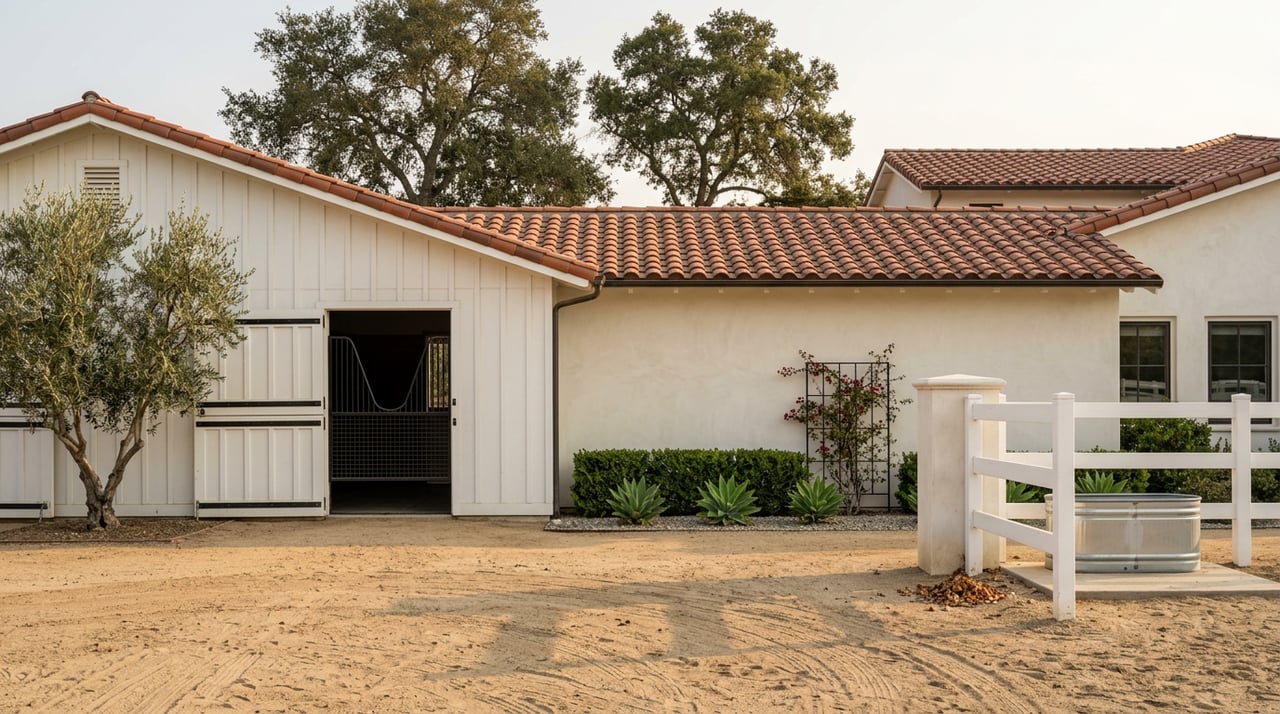
Dream of saddling up at home and riding straight onto scenic trails? If you are considering an equestrian property in Olivenhain, you have probably pictured big skies, privacy, and room for your horses to thrive. The key is knowing how local rules, utilities, wildfire planning, and site features shape what you can build and how you can use the land. This guide walks you through the essentials so you can shop with confidence and avoid costly surprises. Let’s dive in.
Why Olivenhain appeals to riders
Olivenhain sits within the City of Encinitas and is known for its semi‑rural character, large lots, and active horse community. You will find parcels from under an acre to near‑ten‑acre estates, with many properties offering barns, arenas, and direct trail access. The tradeoff for more land is a more car‑dependent lifestyle and added focus on wildfire preparedness.
Local neighbors collaborate on preparedness and evacuation planning through the Olivenhain Fire Safe Council. That community spirit, plus easy access to regional trail systems, makes Olivenhain a standout choice if horses are part of your everyday life.
Horse counts by lot size
Encinitas uses a simple formula to set how many large animals you can keep by right. In Olivenhain, the code allows 2 horses on a 1‑acre lot, plus 1 additional horse for each extra 1/2 acre. The exact number depends on your parcel’s zoning category and lot size, so always verify your property’s zone and compute your by‑right total. You can review the rule in the city’s animal regulations.
If you want to exceed that number, the City requires a Minor Use Permit for a private stable that goes beyond by‑right limits. Plan for extra time, fees, and conditions if your vision includes more horses than the formula allows.
Private vs commercial stables
Not all barns are treated the same under the code.
- Private stables are allowed as accessory uses in the right zones. If your stable would exceed the animal count formula, you will need a Minor Use Permit. See the animal regulations for details.
- Commercial stables that include boarding, lessons, or riding schools are more restricted. The code cites a 10‑acre minimum for commercial stables unless otherwise approved through the Conditional Use Permit process, which brings traffic, environmental, and operational conditions. Expect a deeper review for any commercial plan under the same code section.
Setbacks, buffers, and fencing
Where you place corrals, arenas, and barns matters.
- Enclosures such as pens, corrals, and barns must be at least 35 feet from any dwelling on an adjacent lot. They also need 100‑foot wetland and 50‑foot riparian buffers, which can affect paddock and arena siting. The city limits animal keeping in front or street‑side yards except on larger lots or RR zones. Review the animal regulations before you design.
- Low‑voltage electric fencing is permitted when installed per city rules, including placement and signage. Confirm requirements in the same code section.
Accessory buildings and arenas
Barns are treated as accessory structures, with limits on area and height. A common baseline for detached garages and accessory buildings in Encinitas is 1,000 square feet or 50% of the home’s living area, whichever is greater; going bigger can require a Minor Use Permit. That means you should not assume unlimited barn or outbuilding area. Check the accessory use regulations for thresholds that may trigger discretionary review.
Arenas and significant site work often need grading permits, drainage plans, and inspections. Plan checks and inspections run through the City’s Development Services and Engineering. You can confirm submittals and inspections with the Land Development and Engineering team.
Facility planning basics
Thoughtful design makes daily care safer and more efficient.
- Stalls: For most adult riding horses, the practical standard is 12 × 12 feet. Larger horses and broodmares often need more space. See University of California guidance for stall sizing considerations on the UC ANR small‑acreage horses page.
- Arenas: Common private schooling sizes start around 20 × 40 meters (about 66 × 131 feet), and full dressage arenas measure 20 × 60 meters (about 66 × 196 feet). Learn more about layouts from this dressage arena reference.
- Turnouts and paddocks: Space needs depend on how much turnout you plan, but aim for safe footing, drainage, shade, and reliable water. Many owners target several hundred to 1,000+ square feet per horse for small paddocks. See planning tips in this overview of private horse barn design.
Water, wastewater, and drainage
Confirm your utilities early, since they affect barn operations and long‑term costs.
- Water: Many Olivenhain parcels are served by Olivenhain Municipal Water District (OMWD). Some larger properties may have private wells. Verify your water source, meter size, irrigation allowances, and recycled water options through OMWD.
- Wastewater: Regional wastewater service is coordinated through the San Elijo Joint Powers Authority (SEJPA). Some rural properties operate on septic. If you plan a barn restroom, wash rack, or staff housing, confirm provider service boundaries or septic capacity and maintenance records. Learn more via SEJPA.
- Drainage: Arenas and paddocks need engineered sub‑bases and drainage to prevent mud and runoff to creeks or wetlands. The city enforces wetland and riparian buffers and may require grading permits or erosion controls. Review the animal regulations and coordinate early with Engineering and Inspections.
Fire safety and access
Wildfire planning is part of equestrian life in Olivenhain. Many areas fall within higher fire‑hazard zones, so build a plan for defensible space, trailer access, and evacuation. Ensure your driveway width and turning radii can handle horse trailers and emergency vehicles.
For local guidance and neighborhood programs, start with the Olivenhain Fire Safe Council. Their resources can help you shape an evacuation plan for both people and animals.
Trails, easements, and access
Trail access can make or break an equestrian property. Confirm recorded trail easements, who maintains them, and any rules that govern their use. Deeds, plats, and HOA documents often spell out access rights.
For broader context on regional trail connectivity, review the San Dieguito River Park’s concept plan. If a listing markets “direct trail access,” request the recorded easement or mapping to verify it.
Market snapshot and property types
Expect a wide range of property sizes in Olivenhain, from under an acre to estate‑scale parcels that approach ten acres. Many homes sit on roughly 1 to 3 acres, which often supports a couple of horses by right under the city formula. Pricing varies with acreage, improvements, and location; recent snapshots have shown median values from the low‑to‑mid $1 million range to $2 million and above depending on the data source and timing. For your offer strategy, pull current MLS comps specific to acreage, permitted improvements, and condition.
Buyer due diligence checklist
Use this quick checklist to focus your inspections and contingencies:
- Zoning and horse counts: Confirm your zone and compute by‑right animals under the 2 per acre + 1 per 1/2 acre rule. If claims differ, request permits. See the animal regulations.
- Permit history: Ask for permits and as‑builts for barns, arenas, ADUs, septic, wells, and electrical. Verify with Development Services and Engineering.
- Setbacks and buffers: Check placement of corrals, barns, and arenas for the 35‑foot neighbor setback and required wetland/riparian buffers. Review the animal regulations.
- Water and wastewater: Confirm water source, meter capacity, and any recycled water options with OMWD. Verify wastewater provider or septic capacity; see SEJPA.
- Fire exposure and evacuation: Validate fire‑hazard designations, evacuation routes, defensible space, and trailer access. Use the Olivenhain Fire Safe Council as a starting point.
- Soils, grading, and drainage: If you plan an arena or major grading, order soils studies and expect grading permits. Coordinate with Land Development and Engineering.
- Manure and environmental controls: Document waste handling and storage; avoid runoff to waterways. The city’s animal regulations outline standards and potential conditions.
- Trails and easements: Verify trail access rights and responsibilities in recorded documents. Confirm any private road maintenance agreements.
- Insurance and operating costs: Price homeowners and liability coverage early, factoring in wildfire exposure. Budget for utilities, manure removal, and maintenance.
- Commercial plans: If you are considering boarding or instruction, schedule a pre‑application meeting with Planning. Expect a Conditional Use Permit and environmental review under the animal regulations.
How Michelle helps you buy
Buying a horse property is different from buying a home on a city lot. You need a clear picture of zoning limits, permits, utilities, and the true cost to operate. With deep roots in Encinitas and North County, Michelle brings local insight, a calm process, and a trusted network to get answers fast. From confirming trail easements to coordinating the right inspections, you will feel prepared and supported at every step.
Ready to walk properties and build a plan around your horses and your lifestyle? Connect with Michelle Williams to talk through your goals and get a tailored search set up.
FAQs
How many horses can I keep in Olivenhain?
- Encinitas allows 2 horses on a 1‑acre lot, plus 1 more per additional 1/2 acre. Exceeding that number typically requires a Minor Use Permit. See the city’s animal regulations.
Do I need permits to build a barn or arena in Encinitas?
- Most barns and sizable arenas need building and often grading permits; larger projects may trigger drainage and environmental reviews. Contact Land Development and Engineering.
What are the setback and buffer rules for corrals and barns?
- Enclosures must be at least 35 feet from any dwelling on an adjacent lot, with 100‑foot wetland and 50‑foot riparian buffers. Review the animal regulations before siting improvements.
Who provides water and wastewater service in Olivenhain?
- Many parcels use OMWD for potable water; some have private wells. Wastewater service is coordinated regionally through SEJPA, and some homes are on septic. Check with OMWD and SEJPA.
Is Olivenhain considered a wildfire‑prone area?
- Many areas carry higher wildfire risk, so plan for defensible space, trailer access, and evacuation. Local resources and programs are available through the Olivenhain Fire Safe Council.
Can I run a boarding or lesson business from my property?
- Commercial stables are more restricted and typically require a 10‑acre minimum and a Conditional Use Permit with added conditions. Start with a pre‑application meeting and review the animal regulations.